

 |
 |
|
|
|
|
|
|
|
|
|
|
An 18-month off-road trial will test underground charging systems to juice up on the go and extend driving range
Institute for Highway Safety is known for crash-test safety ratings, but as cars get smarter there's a need to look beyond crashworthiness
It's just a bit shorter than Mt. Everest
Yosemite, Redwood, and other famous parks as they look from outer space
There's a new contender in the century-old quest for perfect, guiltless sweetness: allulose. It's sugar — but in a form that our bodies don't convert into calories. Perfect? Not quite.
Researchers say findings may have important public health implications as vitamin supplements are relatively safe and cost-effective
Free-living songbirds show increased stress hormone levels when nesting under white street lights. But different light spectra may have different physiological effects as this study finds, suggesting that using street lights with specific colour spectra may mitigate effects of light pollution on wildlife
Sarcoptic mange can leave southern hairy-nosed and bare-nosed wombats blind and deaf before eventually killing them
Scientists identify the condition aphantasia, in which people cannot create images in their head
The dust in our homes contains an average of 9,000 different types of fungi and bacteria, a study suggests.
A mosquito can bear up to 23 times its total body weight on each leg, which is crucial for landing on water – the insect's secret is way it stands
Drones are being used to capture video footage that shows construction progress at the Sacramento Kings’ new stadium in California.
8-year-old Harapan joins his brother at an Indonesian breeding sanctuary; fewer than 100 "hairy rhinos" are left in the world
The white Kermode bear of British Columbia is galvanizing First Nations people fighting to protect their homeland
A naturalist cuts through the myths surrounding the invasive plant
Attracting the right species can help get rid of vine-munching insects and allow farmers to cut back on pesticides
It’s becoming increasingly difficult to keep track of online reading material. That’s why physical print-outs sometimes trump a digital copies
Annual vaccinations could be a thing of the past as scientists have successfully tested vaccines on animals infected with different strains of influenza
Websites try to suggest everything from your next best friend to your next best shirt. But are these recommendations a help or a hindrance?
Tropical species with smaller geographical ranges are more likely to die out in a warming climate than those that can adapt by ‘invading’ new regions
Remember winter, when everything was cold and grey? Right now, when all around is lush and green, the contrast couldn’t be greater. But is everything really as it seems? New research shows that we see things differently in winter compared with summer.
Most people think of bacteria as germs, signs of filth, or unwanted bringers of disease. Slowly, that view …
The gloomy octopuses crowded at Jervis Bay, Australia, appear to spit and throw debris such as shell at each other in what could be an intentional use of weapons
Therapies based on hormones that make us more trusting enhance our natural placebo effect – a finding that could alter the way clinical trials are conducted
A new app called Infltr taps into a smartphone's graphics processor to generate filters on the fly, allowing for the perfect shot in one step
Researchers have long struggled to resolve what happens to information when it falls inside a black hole, but the famous physicist says he has a solution
The blind, hairless babies born recently at Washington D.C.'s National Zoo are completely dependent on their mothers—who can sometimes accidentally crush them.
The poop-hoarding insects have an amazingly advanced internal GPS that allows them to navigate by day or night.
Windows 95, the operating system update that changed the way millions of people interacted with their computers, was released 20 years ago today.
Researchers have been using muons to take a peek inside the nuclear reactors in Japan that melted down in 2011. The results could aid the continuing cleanup operations.

Credit: Facebook.com
For all of you anony bloggers and people who fly under a different "name" I've also given you the option to OPT OUT of displaying your real name and facebook page. Just enter a new handle and webpage URL and those will be used instead. Entering a different name will also prevent the posting of your facebook page link so you can stay anonymous yet skip the hassle of dealing with the CAPTCHAs.
And for all of you CAPTCHA lovers out there, you can still login that way. I just figure Facebook is much easier for everyone. I probably won't be adding google, openID, or twitter support any time soon.
Please test it out and let me know if you have any issues.
. . . More
Last by Brian Krueger, PhD on Feb 07, 2011, 10:23am
------
My scientific career has been filled with plenty of misadventures and screw ups. Most of them are really boring mistakes that didn't involve bodily harm, and only resulted in weeks of repeated work or extended nights in the lab re-preparing samples. Though, every good scientist has an epic fail story locked away in their skeleton closet. I think many of us go into science in the beginning thinking that we're unstoppable know it alls. That is until some event punches us in the gut to tell us, "Open your eyes and pay attention or else next time I'm going to aim a little lower and negatively affect your chances of reproduction."
When I was in undergrad, I worked on a bunch of projects ranging from ecology field studies to molecular biology projects in plants and fish. One of the last projects I worked on was one where we were trying to determine if fish bacterial infections could be transferred from mother to egg. This project involved c . . . More


Last by Brian Krueger, PhD on Jan 20, 2011, 12:17pm
The discussion covered a wide range of topics. One of the first that was brought up was how new media tools might be used to increase collaboration between science and industry. One participant stated that she was surprised by the lack of collaboration between academic and industry scientists in the Research Triangle Park area. She said there really was no resource for expert discovery and thought that the creation of a local database would be helpful in finding connections.
Expanding on this researcher database idea, I asked the audience to talk about their use of currently available social networking tools like LabMeeting, MyNetResearch, BioKM, Mendeley, ResearchGate, etc. One biotech researcher said that his company was open to using these tools privately, and that's really what I have seen and heard of over the years. Companies and institutions want to find bette . . . More
Last by Thomas Joseph on Jan 04, 2011, 7:47am

. . . More

Human immunodeficiency virus (HIV) was first discovered in the 1980’s when gay men and IV drug users started turning up in hospitals with very odd opportunistic infections like Kaposi’s Sarcoma Herpes virus. These individuals had severely compromised immune systems and the original name given to the condition was gay related immunodeficiency disorder (GRID). The discovery of a viral cause of the disease came in 1983 from the labs of Luc Montagnier (recently won the Nobel Prize for this work) and Robert Gallo (recently didn’t win the Nobel Prize and is kind of pissed about it).
Genetic tests have shown that HIV originated in African monkeys and is related to a similar condition in monkeys called Simian Immunodeficiency Virus (SIV). It is thought that the virus was passed on to humans through the consumption of “bush meat” in sub-saharan . . . More
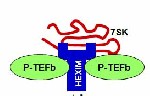
In the fall of 2006, I was finishing up the last few experiments on a project trying to link P53 (a very important protein in cells that helps to prevent cancer) to one of the most important transcriptional activators, P-TEFb. I should probably pause for a second here to give a little bit of background on P-TEFb so that what follows is somewhat understandable. Positive transcription elongation factor b (P-TEFb: Pee Tef bee) is a protein kinase (read as on/off switch) that regulates RNA polymerase II transcription of most genes. RNA polymerase II is the protein responsible for messenger RNA (mRNA) transcription or the process of turning DNA into mRNA. Without mRNA, the transfer form of DNA, proteins cannot be made by the cell, and life does not exist. Essentially, P-TEFb tells RNA polymerase when it’s ok to start making RNA. You can think of P-TEFb as the starter at a track meet, you know, the guy th . . . More

However, the Rock Stars of science pages in GQ only list the scientist’s name and title, while the “Rock stars” get a one or two sentence summary of how awesome they are for standing in on these pictures. What’s the real focus of this campaign? To promote Bret Michaels’ latest reality TV dreck? If a reader wants to actually understand why these scientists were chosen and what they’re doing to cure disease, they have to visit the website. I find it hard to believ . . . More
Last by Thomas Joseph on Nov 23, 2010, 12:01pm

Genomic Repairman kicked this one off early. He's off on his honeymoon but gave us a great post on his experiences as both mentee and mentor. Appearances by lazy PI, Awesome PI, and the amazing Genomic Repair Girl.
Dr. Girlfriend thinks that the mentee-mentor relationship should be an open one with mutual respect and the knowledge that the mentor is not all knowing, but there to provide some support and guidance as long as the mentee is willing to put in the effort
GertyZ thinks the mentor is there for support and the relationship . . . More
Last by Brian Krueger, PhD on Feb 07, 2011, 10:01am
I did my homework on my mentor. I read a bunch of old papers, I understood the direction and the goals of the lab. I remember our first lab meeting vividly, well, I remember how I felt after the lab meeting. I was exhausted. My brain physically hurt. I thought I knew it all going into that meeting and I realized I didn’t know anything. It was a wake up call, but I think I liked that feeling. It was fresh and challenging.
During my rotation, I put in ungodly long hours, not because I thought it was expected of me, but because I wanted to. At this point in time I was enamored with the science. It’s funny how this changed for me as I look back on my four and a half years in t . . . More
They say you never forget a good teacher but to be honest this is somewhat, erm, crap, you never forget a bad teacher either. So in short you never forget a teacher. Unless they were wholehearted bland. So this is wholly transferable to you never forget a good mentor or boss. In my somewhat chequered life I can remember the woes and follies of my supervisors and the purity and talents of my bosses. How I tried to learn from them and then put into practise their mistakes and triumphs.
My own experience as an underling
In academia we have always got some sort of hierarchy, the lecturer lectures to us via whichever medium they can utilise to get the job done. In my day blackboard and if lucky photocopied handouts, then OHP transparencies and photocopies of OHP transparency as handouts. Then came powerpoint and photocopies of powerpoint print outs, now a whole world of technology is there to transpose this information.
So whilst my PhD supervisors (I had two) had of course gone through this mellay of learning themselves, no one had really stopped along the way and given them a . . . More

I'll be in contact with Jane to distribute her Apple Gift Card!
Stayed tuned for details on our next contest!
Again, thanks to BioKm for their generous contribution to this contest. You will be hearing more about them and their awesome on-line LIMS system, BioData, over the next few weeks as I review their product! Check it out, and . . . More
Last by Brian Krueger, PhD on Oct 26, 2010, 8:54am
Let me first start off by saying that I entirely see where PalMD and CPP are coming from, although I think it’s disingenuous to comment about my intentions without first reading my post about why I post press releases. I’m trying to develop a site where the public and experts can come to discuss science. I would love to have experts rate the releases so that visitors can be better informed on their veracity. The fact is that thes . . . More
 |
 |