


 |
 |
Post Archive
|
|
Blogger Profile
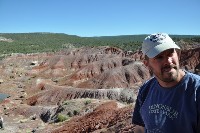
Jeffrey Martz
Poncha Springs CO USA
This is a blog about paleontology (the study of the history of life on Earth through the fossil record) with an emphasis on vertebrate paleontology, the study of extinct vertebrates (animals with backbones). The methodology and findings of paleontology will be discussed, as well as related issues such as evolutionary theory. The blogger is a vertebrate paleontologist specializing in the Triassic Period, the Beginning of the Age of Dinosaurs.
My posts are presented as opinion and commentary and do not represent the views of LabSpaces Productions, LLC, my employer, or my educational institution.
|
|
Blog RSS Feed



|
|
Around the Network

Author: Brian Krueger, PhD | Comments: 9
Author: Brian Krueger, PhD | Comments: 0
Author: Brian Krueger, PhD | Comments: 2
Author: Brian Krueger, PhD | Comments: 2
|
|
Jeffrey Martzs Blogs
Jeffrey Martz has not written any blog articles.
 |
 |
Friends